How the first American pope was handpicked to extend Francis’ compromise with the CCP and globalist powers, leaving the faithful with continuity instead of renewal.
Introduction — White Smoke, Dark Reality
When Robert Francis Prevost was elevated as Pope Leo XIV, the world’s press hailed it as a historic milestone: the first American pope, a supposed new beginning for the Catholic Church. Social media lit up with excitement, and many Catholics rejoiced, believing this signaled a fresh chapter after the long and controversial pontificate of Francis.
But now, only months later, the tone has changed. The chorus of praise is no longer unanimous. More voices are raising doubts, and many others speak with certainty: Leo XIV is not a reformer at all, but the chosen successor of Francis’ policies and agenda, carefully prepared to carry them forward—now deeply intertwined with CCP influence and globalist powers.
This was made unmistakably clear in the days immediately following the conclave. After the white smoke rose above the Sistine Chapel in May 2025, Steve Bannon gave an interview warning that the election was “more rigged than the 2020 election.” He insisted that Prevost had been handpicked by Francis and his cardinals to ensure the continuity of a corrupt system—one aligned with CCP and globalist interests rather than the faithful.
This detail is crucial. Bannon’s words, now recirculating on social media, are not a new reaction today; they were spoken right after the conclave, at the very moment when the world was celebrating. From the beginning of Leo XIV’s pontificate, strong voices were already naming him not as a break from Francis, but as the continuation of Francis’ system.
From Pope Francis to Pope Leo XIV: The Line of Continuity
To understand why Pope Leo XIV cannot be separated from Pope Francis, one must first recall the defining marks of Francis’ papacy. Jorge Mario Bergoglio, elected in 2013 as the first Jesuit pope and the first from Latin America, reshaped the Catholic Church in a single decade. He spoke the language of humility and mercy, but his political choices told another story.
The Vatican-China Deal: Handing Authority to the CCP
In 2018, Francis signed the secretive Vatican-China agreement, granting the Chinese Communist Party significant influence over the appointment of bishops. Though the full text has never been published, what is known has alarmed faithful Catholics worldwide: the successor of Peter had effectively ceded spiritual authority to an atheistic regime. This deal was renewed in 2020, again in 2022, and extended further in 2024, despite persistent evidence of persecution of underground Chinese Catholics. For many, it was the most striking proof that Francis had been compromised by globalist powers, with the CCP at the center.
UN Agendas, Migration, and the War on Tradition
Francis also pushed a globalist agenda across multiple fronts: climate change initiatives aligned with the United Nations, repeated calls for mass migration policies in Europe and North America, and the systematic marginalization of traditionalist Catholics who resisted these directions. His appointments reshaped the College of Cardinals, ensuring that his theological and political legacy would long outlast his death.
How Pope Francis Built His Successor Step by Step
It is in this context that Robert Francis Prevost’s trajectory must be read. An American by birth, but shaped by decades of ministry in Peru and Chile, he was uniquely positioned to fit Francis’ plan: a bridge between Latin America and the United States. In 2014, barely a year into Francis’ papacy, Prevost was appointed bishop of Chiclayo, Peru. In 2020, Francis expanded his authority by naming him Apostolic Administrator of Callao. By 2023, Francis had brought him directly into the Roman Curia as Prefect of the Dicastery for Bishops—the very office that oversees the global process of selecting bishops. That same year, Francis elevated him to the rank of cardinal. And in 2025, the College of Cardinals, stacked with Francis’ own appointees, elected Prevost as Leo XIV.
This sequence is not coincidence. It is a chain of deliberate steps. Francis identified Prevost as a loyal executor of his policies and placed him on the path to succession. The result is not a new beginning for the Church, but the institutionalization of Francis’ agenda under another name.
Why Leo XIV Is the Perfect Heir
This section explains in detail why Francis and his allies had to choose this specific successor—showing how his background, positions, and loyalties all made him the indispensable heir.
- The Executor They Needed
Unlike strong-willed traditionalist or conservative prelates, Leo XIV is known for his diplomatic temperament and willingness to administer rather than innovate. This made him the perfect executor of another man’s vision. Francis did not need a rival; he needed someone to carry his program forward quietly but efficiently. Prevost’s record shows him to be exactly that.
2. The Roots That Mattered
Leo XIV’s American birth gave him symbolic appeal in the United States, where many Catholics longed to see one of their own on the Chair of Peter. At the same time, his decades in Peru and Chile rooted him firmly in the Latin American church, Francis’ natural base of support. He could present himself as both an outsider and an insider, appealing to multiple constituencies at once.
3. The Power of Appointments
As Prefect of the Dicastery for Bishops, Leo XIV held one of the most consequential posts in the Catholic Church. The Dicastery proposes names for episcopal appointments around the world, and the pope typically accepts its recommendations. In effect, Prevost was already shaping the future of the global episcopacy even before he became pope. From this vantage point, he was not only enforcing Francis’ policies but also ensuring that like-minded bishops would dominate for decades to come.
4. The Agenda They Sought to Preserve
Finally, Leo XIV’s alignment with Francis’ diplomacy toward the CCP, as well as his openness to climate, migration, and global governance initiatives, makes him highly acceptable to the same transnational networks that celebrated Francis. In choosing him, the conclave ensured not the renewal of faith but the continuation of a political and globalist agenda joined with hidden powers.
Summary of These Points: Taken together, these four factors explain why Francis and his allies saw Leo XIV as indispensable. He was the executor they could trust, with roots that tied him to both America and Latin America, control over the appointments that would shape the Church for decades, and a proven willingness to preserve an agenda aligned with the CCP and globalist elites. This is why no other successor could have served their purpose so completely.
What This Heir Truly Represents
It is evident, then, that what this heir is tasked to do and preserve is not the timeless faith once delivered to the saints, but the globalist and political agenda of his predecessor. Instead of shepherding the Church back to its spiritual roots, Leo XIV has been positioned to entrench the very compromises and betrayals that Francis inaugurated. Far from the renewal many hoped for, his pontificate signals a deeper departure of the Vatican from true Christian faith, leaving the faithful exposed to ideologies that undermine the Gospel itself.
What makes this continuity even more dangerous is that Francis’ agenda was never his alone. It bore the imprint of forces far larger than one pontificate. The Vatican-China deal showed how the CCP gained a foothold inside the Church, and Francis’ alignment with U.N.-style global policies revealed his compliance with transnational powers. In other words, the project Leo XIV inherits is not simply Francis’ vision—it is the agenda of hidden powers: the CCP, globalist elites, and other networks that seek to turn the Vatican into a tool for their designs.
Reactions and Controversy
The election of Leo XIV has not passed quietly. From the very moment of white smoke above the Sistine Chapel, voices of resistance and alarm have risen alongside the cheers. This section highlights the three main strands of reaction.
- Bannon’s Warning:
A Rigged Conclave Steve Bannon’s immediate response was the bluntest: he accused the conclave of being “more rigged than the 2020 election” and described Leo XIV as “the worst possible choice for MAGA Catholics.” To Bannon, the new pope was not a pastor but a political operative, installed to neutralize populist Catholic resistance. His words, initially dismissed by many as hyperbole, are now gaining new weight as the direction of Leo XIV’s pontificate becomes clear.
2. Divided Catholic Conservatives:
Conservative Catholics have reacted in different ways. Some have echoed Bannon’s alarm, seeing Leo XIV as the extension of Francis’ betrayal. Others have chosen a wait-and-see posture, hoping that his American roots might moderate his globalist tendencies. Yet even among the cautious, unease remains: the chain of appointments and loyalties is too obvious to ignore.
3. Media’s Mask of Unity:
Meanwhile, mainstream outlets have emphasized Leo XIV’s “humility” and “bridge-building” qualities, portraying him as a unifying figure. This packaging, however, conceals the fact that his rise was the culmination of Francis’ carefully laid plans and the empowerment of the very global networks that had already compromised the Vatican.
Summary of These Points: These three strands of reaction—Bannon’s sharp warning, the divided stance among conservative Catholics, and the media’s polished narrative—together reveal the contested meaning of Leo XIV’s papacy. From alarm to hesitation to applause, the responses mirror the deep fractures within both the Catholic Church and the wider world about the forces shaping the Vatican today.
Conclusion — White Smoke Above, Dark Compromise Within
The rise of Leo XIV cannot be separated from the legacy of Francis. Every major step in his career was orchestrated under Francis’ watch, and every signal points to continuity rather than reform. The significance of this succession is not merely ecclesiastical; it is geopolitical. For embedded within Francis’ papacy were the fingerprints of the CCP and transnational elites who seek to bend the Vatican to their purposes. Now Leo XIV has been entrusted to carry that mission forward.
What many once greeted as a historic milestone—the first American pope—is, in truth, the deepening of a crisis: the Vatican’s departure from true faith and its capture by CCP and globalist interests. The faithful are right to feel alarm, for under Leo XIV, the Catholic Church risks not only the loss of its spiritual authority but also its complicity in an agenda hostile to the Gospel itself.
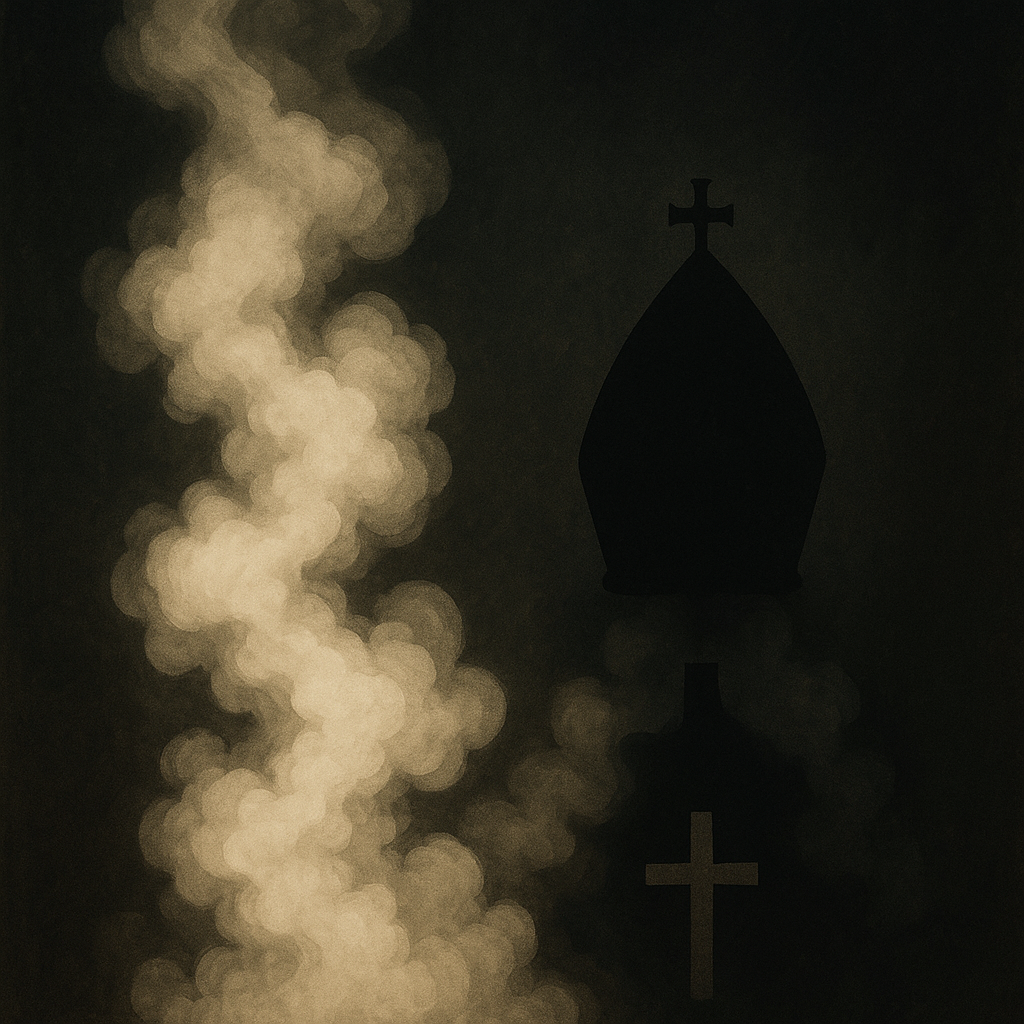
The path ahead is clear. Those who remain loyal to Christ must discern the difference between outward pageantry and inward truth, between the white smoke above the Sistine Chapel and the dark smoke of compromise rising within. The call is not to celebrate illusions of progress, but to stand firm in the unchanging faith once delivered to the saints.
Sources and Author’s Note:
This analysis draws on public reporting, interviews, and commentary from observers such as Steve Bannon and other media outlets. As the author, I write from the perspective of a Christian who is not part of the Catholic Church. My intent is not to speak as an insider of Catholicism, but to highlight the political, globalist, and CCP-related influences surrounding the papal succession, and the dangers they pose to true faith in Christ.
 The Light in the Shadows
Leave a comment