The Mechanisms of Artesunate in the Treatment of Cancer, Autoimmune Diseases, Diabetes, and Uterine fibroids
1. The Mechanisms of Artesunate in the Treatment of Cancer, Autoimmune Diseases
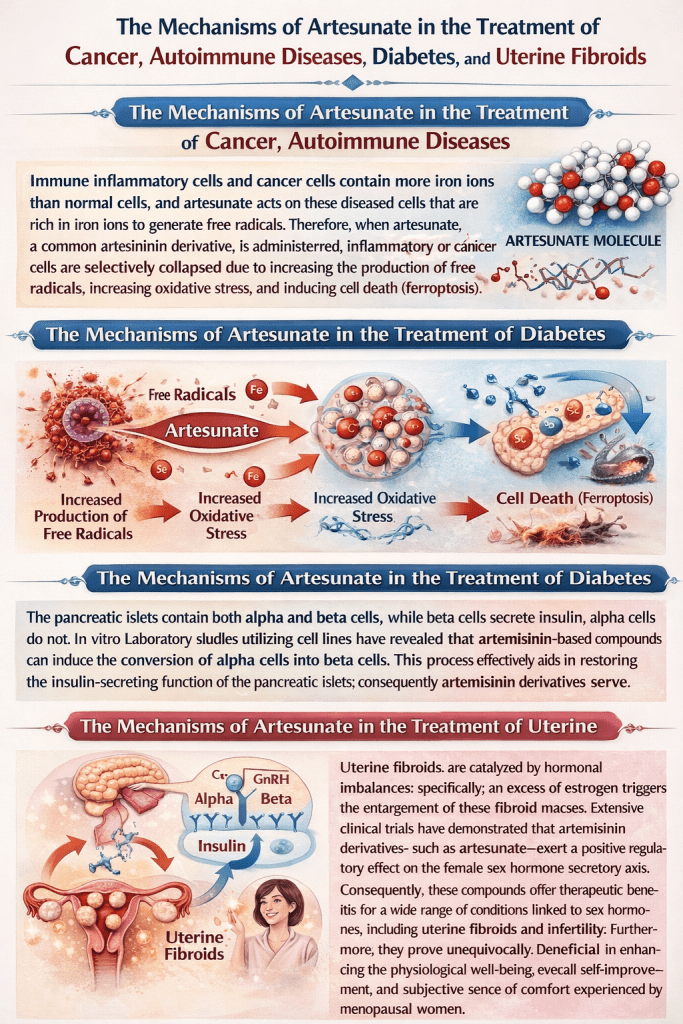
Immune Inflammatory cells and cancer cells contain more iron ions than normal cells, and artesunate acts on these diseased cells that are rich in iron ions to generate free radicals. Therefore, when artesunate, a common artesisinin derivative, is administered, inflammatory or cancer cells are selectively collapsed due to increasing the production of free radicals, increasing oxidative stress, and inducing cell death (ferroptosis) in them.
2. The Mechanisms of Artesunate in the Treatment of Diabetes
The pancreatic islets contain both alpha and beta cells; while beta cells secrete insulin, alpha cells do not. In vitro laboratory studies utilizing cell lines have revealed that artemisinin-based compounds can induce the conversion of alpha cells into beta cells. This process effectively aids in restoring the insulin-secreting function of the pancreatic islets; consequently, artemisinin derivatives serve as effective therapeutic agents for diabetes, and this mechanism constitutes the primary basis for their hypoglycemic action.
3. The Mechanisms of Artesunate in the Treatment of Uterine fibroids
Uterine fibroids are catalyzed by hormonal imbalances; specifically, an excess of estrogen triggers the enlargement of these fibroid masses. Extensive clinical trials have demonstrated that artemisinin derivatives—such as artesunate—exert a positive regulatory effect on the female sex hormone secretory axis. Consequently, these compounds offer therapeutic benefits for a wide range of conditions linked to sex hormones, including uterine fibroids and infertility. Furthermore, they prove unequivocally beneficial in enhancing the physiological well-being, overall self-improvement, and subjective sense of comfort experienced by menopausal women.
Source: from Dr. Eglise
 The Light in the Shadows
Leave a comment